
'The net inflows into MF schemes may also have been lower last month, with investors booking profit and taking a more measured approach amid elevated valuations.'

Among Sensex firms, Bharat Electronics, Eternal, Mahindra & Mahindra, Kotak Mahindra Bank, Tata Motors and Power Grid were the gainers. However, Adani Ports, ITC, UltraTech Cement and Titan were among the laggards.

The famed Darjeeling tea may have slip to a new production low in 2025, as changing weather patterns, a shortage of pluckers and mounting economic stress weigh on the region's gardens.

'While investors need to be prepared for making some losses, they should not lose big money chasing euphoria amid fear of missing out.'

Benchmark BSE Sensex rose by 156 points while the Nifty closed above the 17,300 level on Thursday after gains in metal, IT and capital goods shares amid foreign capital inflows. The 30-share BSE benchmark gained 156.63 points or 0.27 per cent to settle at 58,222.10. During the day, it jumped 513.29 points or 0.88 per cent to 58,578.76.

'The market's nervousness ahead of anticipated US tariffs has led to a significant downturn in Indian equities.'

From the 30-share Sensex pack, Sun Pharma, Reliance Industries, Infosys, Tata Motors, Infosys, Titan, Maruti and NTPC were among the major laggards. Mahindra & Mahindra, Tech Mahindra, HCL Technologies and IndusInd Bank were the gainers.

'...not merely in managing fiscal mathematics, but in demonstrating conservatism and prudence within that framework.' 'Looking forward, we believe sufficient growth drivers exist -- ranging from government reforms to revival in consumption to favourable monsoons. Numerous factors support the Indian economy.'

Retail investors have been the hardest hit in the recent market downturn, with stocks where they hold over 20% falling 45% from their 52-week highs.

With the market capitalisation crossing $1.6 trillion within a couple of months after piercing the magical $1 trillion mark, and a vibrant equity derivatives segment to boast, the Indian stock markets look much attractive in terms of depth as well, they add. The equity derivatives market in China is only a recent start and is yet to catch momentum.

Among Sensex firms, Tata Steel, HCL Tech, Bajaj Finance, Bajaj Finserv, Bharat Electronics and Eternal were the major laggards. However, Maruti, Mahindra & Mahindra, Tata Motors Passenger Vehicles and ITC were among the gainers.

'If one believes that the Indian stock market will go up 70 per cent every year for the next 10 years, I wish you good luck!'
Why sub-prime mortgage in the US is lashing Indian stocks markets

'When AI comes in, coders in Bangalore or Hyderabad will lose their jobs.'

Among Sensex firms, Bajaj Finance, Bajaj Finserv, Reliance Industries, HDFC Bank, Tech Mahindra and Axis Bank were the major gainers. However, Asian Paints, HCL Tech, Titan and Hindustan Unilever were among the laggards.

Even though stocks may remain volatile in the run-up to the polls, as political parties stitch up alliances, the long-term trajectory for the markets remains bullish.

From the Sensex firms, Reliance Industries climbed 3.52 per cent after the firm on Friday reported a 9.6 per cent year-on-year rise in net profit for the September quarter, driven by strong performance in its consumer-facing retail and telecom businesses and a recovery in its core oil-to-chemicals segment. Bajaj Finserv, Axis Bank, State Bank of India, Tata Consultancy Services, Titan and Bharti Airtel were also among the gainers. However, ICICI Bank, Mahindra & Mahindra, Eternal, Adani Ports and Power Grid were among the laggards.

'The market is still very bullish. The demand is so strong that for eight models, we have no units in our factories to dispatch to dealers,' said Partho Banerjee, senior executive officer, marketing & sales, Maruti Suzuki India (MSIL).

After a record-breaking year, India's automobile industry is entering 2026 on a relatively strong footing, with sales growth expected in the 6-8 per cent range. The outlook is underpinned by policy support, including GST rationalisation, easing monetary conditions, and income tax relief, which together are likely to improve affordability and sustain consumer demand across vehicle segments.

For investors who missed the initial IPO frenzy, the market correction is an opportunity to selectively invest in promising names, but patience and careful evaluation remain the key.

Trading sentiment in the equity market will largely be driven by domestic corporate quarterly earnings, any update related to US tariffs and foreign fund movements this week, analysts said. Investors would also focus on world market trends, movement of global oil benchmark Brent crude and the rupee-dollar trend for further cues, experts noted.

Goldman Sachs downgraded its rating on Indian stocks to 'underweight'.

After a year of modest returns, equity investors may anticipate gains of 10-15 per cent in Samvat 2082, which began on October 21. Although valuations have moderated from their peaks a year earlier, they remain above long-term averages, potentially limiting sharp upsides.

'Reits are suitable for investors seeking regular income and real estate exposure without managing physical properties, especially NRIs and retirees.'

Equity benchmark indices are facing massive corrections, with the NSE Nifty declining over 14 per cent from its lifetime high hit in September last year due to several negative triggers like stretched valuations, foreign fund exodus, disappointing quarterly earnings and rising global trade tensions dragging markets lower. The BSE benchmark Sensex hit its record peak of 85,978.25 on September 27 last year, and the Nifty also reached a lifetime high of 26,277.35 on the same day.

The brother of the chancellor of Al Falah University, linked to the Delhi blast probe, has been arrested by Madhya Pradesh police from Hyderabad in connection with nearly 25-year-old fraud cases.

'Indian markets may underperform global peers for the next two quarters.' 'But beyond that, India should catch up and resume its long-term growth path.'
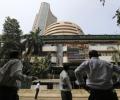
Trading sentiment in the equity markets this week will be guided by global cues, Covid-19 trends and quarterly earnings by market heavyweight TCS, analysts said. Investors will also monitor movement of rupee and crude oil as well as progress of monsoon, they added.

The Indian indices also offer one of the lowest dividend yields.

Lord Ganesha's teachings offer valuable insights for investors in the Indian stock market. By thinking big, working consistently, starting early, and approaching investing with a rational mindset, investors can increase their chances of achieving their financial goals.

The outcome of the general elections, the Morgan Stanley note says, has enough firepower to sway the markets on either side.

Among Sensex firms, Bajaj Finserv, Bajaj Finance, Tata Steel, Reliance Industries, Sun Pharma, Tata Motors Passenger Vehicles, Axis Bank and Infosys were among the major gainers. Bharti Airtel and Asian Paints emerged as the laggards from the pack.

Govt must introduce automated investment scheme for poor.
From the 30-share Sensex pack, Tata Consultancy Services and Infosys jumped over 4 per cent each. HCL Technologies, Tech Mahindra, Adani Ports, Larsen & Toubro, Maruti and Reliance Industries were also among big gainers. Titan, IndusInd Bank, Hindustan Unilever, Axis Bank and HDFC Bank were the laggards.

'Defence, capital goods, engineering, capital market-related stocks, autos, and cement sectors are my bullish bets for Samvat 2082.'

Here's how beginners can follow a very practical approach for finding stocks for long term investing and building a decent portfolio.

Investors have put money in Ambuja Cements shares as the cement major has moved to consolidate its operations. The Adani Group company has proposed to merge its subsidiaries ACC and Orient Cement into the parent entity.

Prices of televisions are expected to rise by 3-4 per cent from January next year on account of the rising cost of memory chips and depreciation of the rupee, which recently crossed the 90-to-a-dollar mark for the first time.
Pradip Shah, managing director, IndOcean, feels that although gold has done reasonably well, it doesn't really create too much value in the long run.

The index is currently trading at 149 per cent of its historical P/B valuation, surpassing its previous peak of 125 per cent made in 2020-21.
